
Choosing a new roof in Southwest Florida isn’t just about looks. In Cape Coral, Fort Myers, Naples and Punta Gorda, your roof deals with year-round UV, salt air, heavy summer rain and hurricane-force wind. The material you pick also affects what you pay for homeowners insurance and how long before you need to replace it again.
Most homes in our area end up choosing between three options: asphalt shingles, standing seam metal, and concrete or clay tile. Here’s how they compare, based on what we see on real Southwest Florida homes.
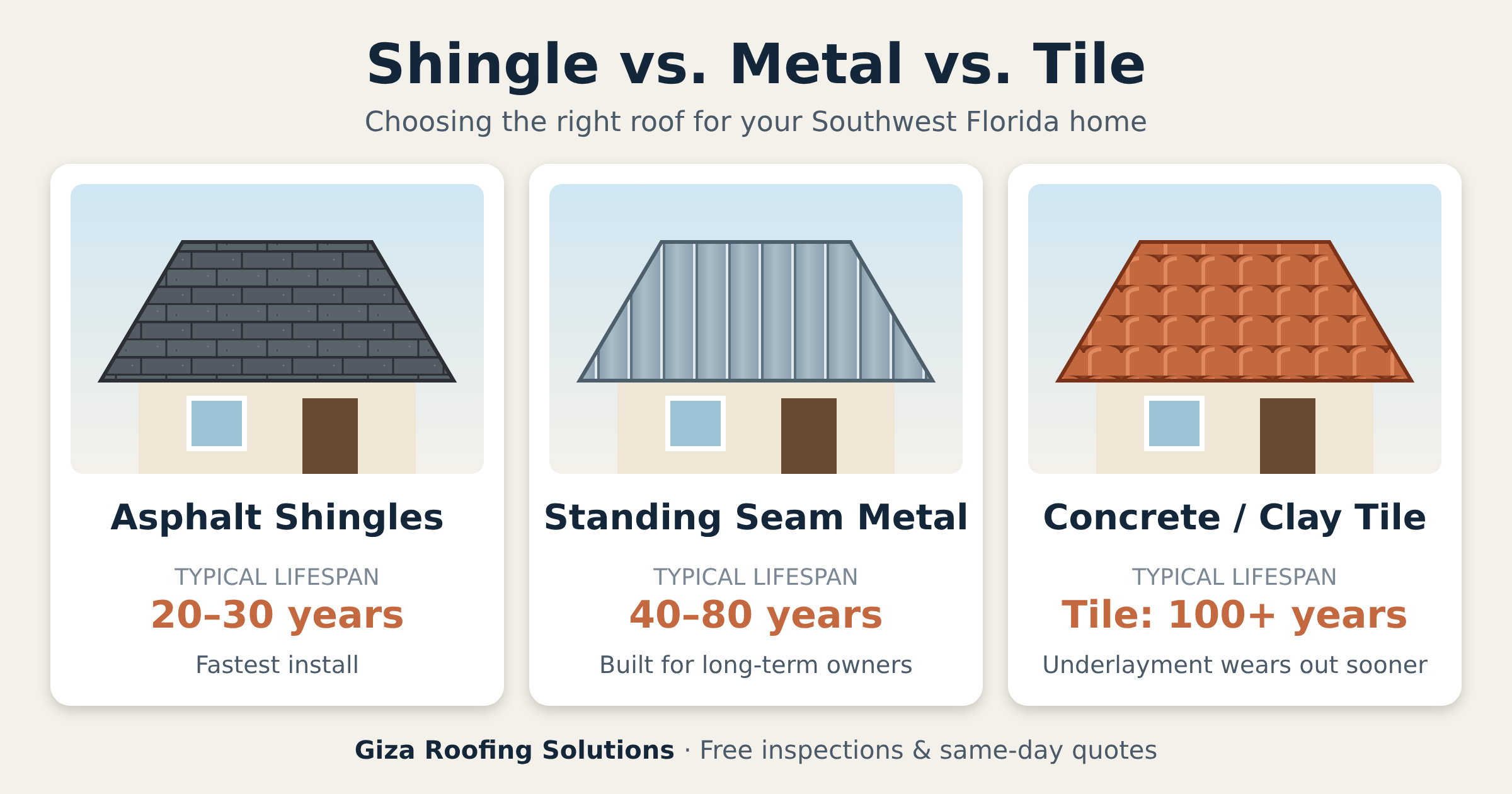
Quick comparison
| Asphalt shingles | Standing seam metal | Concrete / clay tile | |
|---|---|---|---|
| Typical lifespan | About 20 years (3-tab), about 30 years (architectural); less in heavy heat and UV | 40–80 years | Tile itself can last 100+ years; underlayment wears out much sooner |
| Weight | Light | Lightest | Heaviest (structure must support it) |
| Best for | Faster install, shorter-term owners | Long-term owners, coastal and canal homes | Mediterranean-style homes, HOA communities |
| Biggest drawback | Shortest life in Florida sun | Needs the right metal and fasteners near salt water | Cracked tiles and underlayment repairs |
Lifespan ranges are national averages from This Old House. Florida’s heat and UV tend to push shingles toward the low end.
Asphalt shingles: fast and familiar
Shingles are the most common roof in the country and the fastest of the three to install. Today’s architectural shingles are much tougher than the flat 3-tab shingles on many older Florida homes, and many are rated for high wind when installed to manufacturer specs.
The trade-off is lifespan. Constant sun and heat break down asphalt faster here than up north, and poor attic ventilation makes it worse. Choosing a lighter color and having proper ventilation helps.
Good fit if: you want a quicker install, or you don’t plan to stay in the home for decades.
Standing seam metal: built to last
Standing seam metal has concealed fasteners and raised, interlocking seams that shed heavy rain fast. A properly installed system can last 40 years or more, and many homeowners never replace their roof again.
Near the water, material choice matters. Salt air can corrode the wrong metal or fasteners. In coastal and canal-front areas like Cape Coral, ask your roofer which metal, coating and fasteners they recommend for salt exposure.
Good fit if: you plan to stay long-term, live near salt water, or want the most storm-ready option.
Concrete and clay tile: the classic Florida look
Tile is the signature look of many Southwest Florida neighborhoods, and the tiles themselves can last a very long time. They handle heat well and resist fading.
What most homeowners don’t realize is that the underlayment beneath the tile does the waterproofing. It wears out long before the tile does, so an older tile roof can leak even when the tiles look fine. Tiles can also crack if walked on or hit by debris.
Tile is heavy, so your home’s structure must be able to support it. Many HOAs in our area require tile or a specific look, so check your HOA rules before deciding.
Good fit if: you love the Mediterranean look, your HOA requires it, or your home already has tile.
Insurance: what Florida homeowners should know
In Florida, your roof’s age can affect your homeowners insurance. Under Florida Statute 627.7011, an insurer can’t refuse to write or renew a policy solely because of roof age if the roof is less than 15 years old. If your roof is 15 or older, you can get an inspection at your own expense. If it shows at least 5 years of useful life left, the insurer can’t refuse you based on age alone.
That makes lifespan a money question. A roof that lasts longer keeps you out of the “old roof” category longer.
A new roof can also lower your premium through a wind mitigation inspection (Florida form OIR-B1-1802). Insurers may give credits for things like roof covering, how the roof deck is nailed down, roof-to-wall connections, and a secondary water barrier (source). Ask your roofer to document these upgrades, then ask your insurance agent which discounts apply to you.
Every insurer and policy is different. Talk to your agent before you choose a material.
Which roof is right for your home?
There’s no single best roof. It comes down to how long you plan to stay, how close you are to salt water, and what your HOA allows.
- Selling in a few years: architectural shingles
- Staying long-term or living on the water: standing seam metal
- Mediterranean-style home or tile HOA: concrete or clay tile
Not sure which fits? Giza Roofing Solutions offers free roof inspections across Cape Coral, Fort Myers, Naples and Southwest Florida. We’ll look at your current roof, explain your options in plain terms, and give you a same-day quote. Schedule your free inspection or call us at 239.980.2424.