
The roof of your home, especially in a Southwest Florida location like Cape Coral, faces some of the country’s most challenging weather. More than just shingles or tiles matter; the structural integrity of your entire roofing system relies heavily on a component often out of sight: the roof sheathing (most commonly plywood or Oriented Strand Board—OSB). The stringent Florida State Building Code (FBC) mandates the proper selection and installation of this foundational layer.
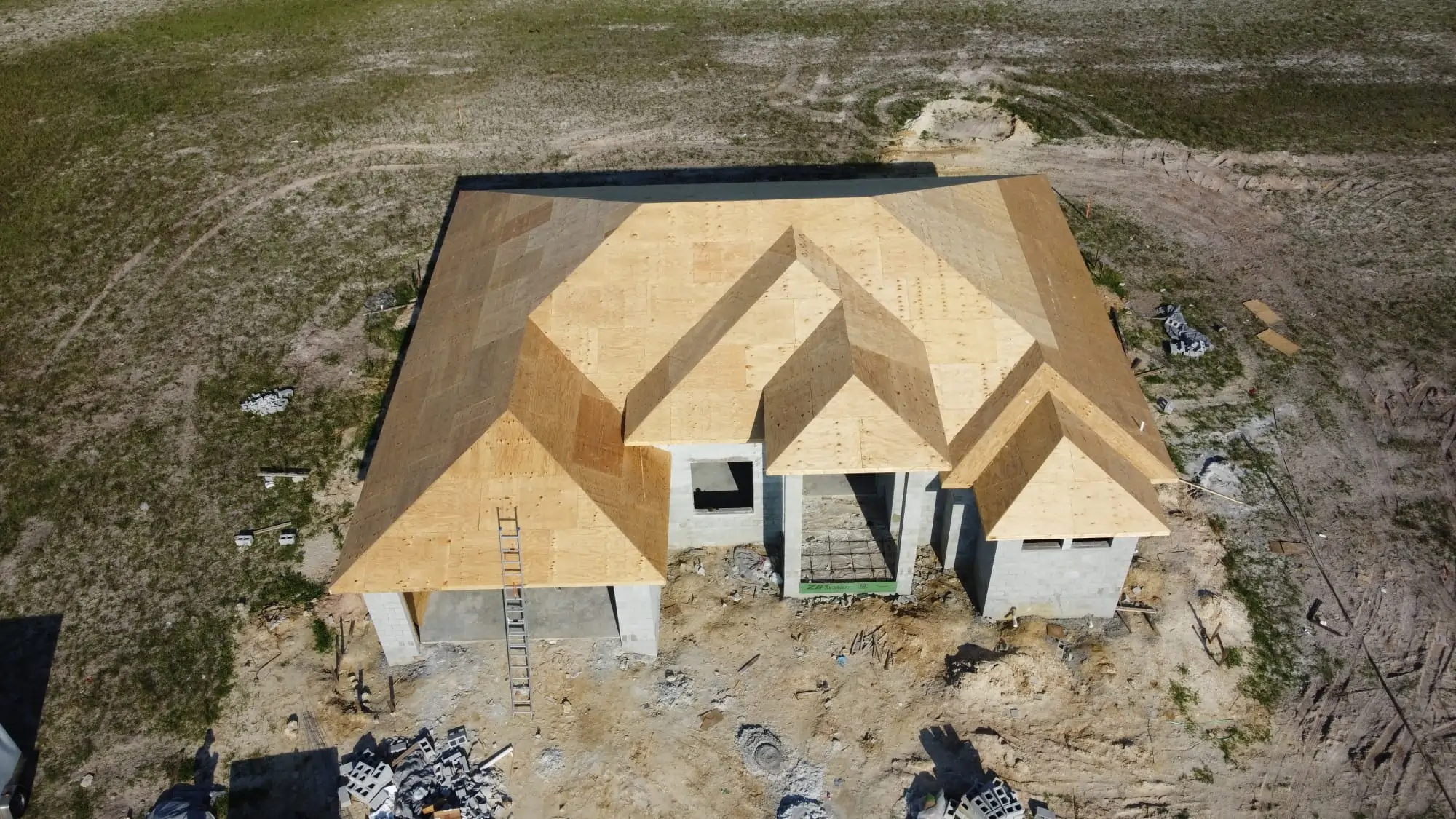
Sheathing: The Foundation of Durability and Strength 🛡️
Roof sheathing is the structural decking material that contractors securely fasten to your roof frame’s rafters or trusses. All other roofing components, from the underlayment to the final shingles, install upon this surface. Its importance is paramount, especially when you consider high-wind events.
Structural Significance in High-Wind Zones
Florida frequently experiences hurricanes and tropical storms. The sheathing must be strong enough to resist the immense wind uplift forces that try to tear the roof deck away from the framing. When installed correctly, the sheathing creates a diaphragm effect. This means the wind load’s force distributes across the entire roof structure. This integral strength ultimately protects the home from catastrophic damage during severe weather.

Code-Compliant Thickness for Southwest Florida📏
The FBC sets forth explicit minimum requirements for roof sheathing thickness. This is especially true in areas classified as high-wind zones, which include Cape Coral and greater Southwest Florida.
-
Minimum Thickness: Historically, sheathing panels required at least 15/32 inches (nominal 1/2 inch) thick.
-
Optimal and Current Standard Thickness: Following the latest FBC updates, minimum nominal thickness is frequently 19/32 inches (nominal 5/8 inch). This applies particularly in zones with high design wind speeds (often 140 MPH or greater in Southwest Florida). The industry currently considers this 19/32 inch thickness the best sheathing thickness. It maximizes resistance to wind uplift and ensures the utmost code compliance for new construction and reroofing projects.
-
Material and Rating: Contractors can use either plywood or OSB. However, they frequently specify plywood for its superior resistance to nail-head pull-through. Furthermore, all panels must carry an Exposure 1 or better rating. This rating demonstrates suitability for exterior use and resistance to moisture exposure during construction.
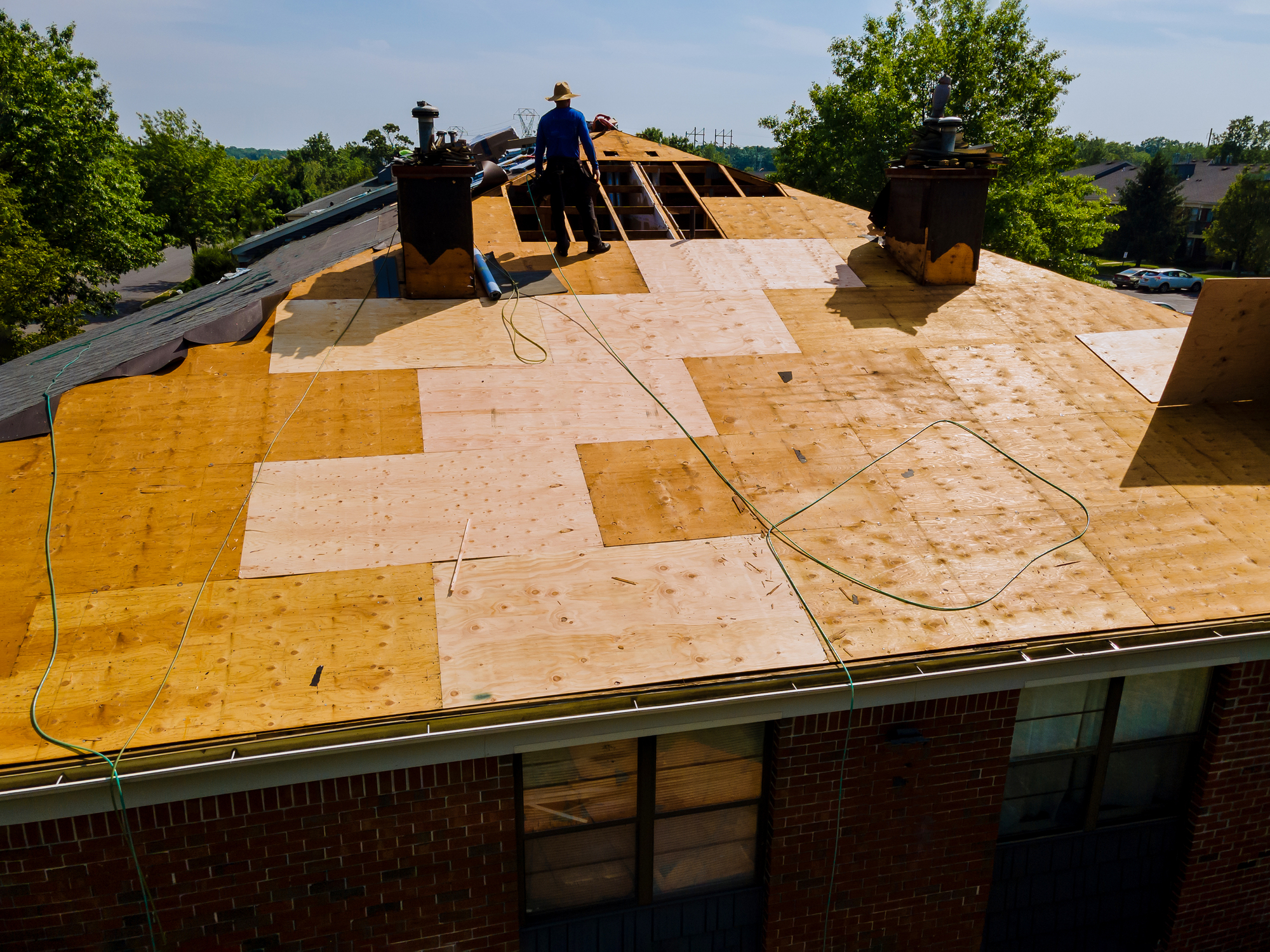
Giza Roofing’s Commitment: Full Sheathing Renailment and Replacement
At Giza Roofing Solutions, we don’t just replace the shingles or tiles—we upgrade the entire roof defense system. When we perform a full tear-off and roof replacement, we take two critical steps to ensure your home meets or exceeds current Florida Building Code standards:
-
Sheathing Inspection and Replacement: We carefully inspect all exposed plywood for moisture damage, rot, or structural defects. We remove and replace all damaged or rotted plywood and install new, code-compliant sheathing wherever necessary to ensure a solid, secure deck for your new roof system.
-
Full Renailment Upgrade: We renail all existing sheathing that remains to bring your home into compliance with the most current FBC standards. We use the mandated ring-shank nails (2-3/8 inches or greater) and install them in the tight 6-inch on center (o.c.) spacing pattern across all edges and the field of the sheathing panels.
This critical process ensures your roof deck maximizes its wind uplift resistance, transforming it into a robust, code-compliant structural diaphragm ready to face hurricane-force winds. We never cut corners on the foundation of your roof’s protection.
Fastening Details: The Mandate for Ring-Shank Nails🔨
The correct fastener type and nailing pattern directly result in the sheathing’s ability to remain fastened during a storm. The sheathing must remain securely attached to the trusses. The FBC specifically mandates the use of ring-shank nails. These nails offer superior withdrawal resistance compared to smooth-shank common nails.
The Specific Fastener
For a significant portion of roof decking in Florida’s high-wind zones, contractors frequently require the following specific nail, even when using the minimum 15/32 inch sheathing:
-
Nail Type: ASTM F1667 RSRS-01 ring-shank nails (Ring Shank Roof Sheathing).
-
Nail Specifications: These fasteners specify a length of 2-3/8 inches and a nominal diameter of 0.113 inches. This specific dimension ensures adequate penetration into the framing member. The ring shank provides the necessary mechanical grip to resist extreme wind uplift forces.
Nailing Pattern and Plywood Clips
A specific schedule dictates the proper application of these nails. This schedule creates maximum resistance.
-
Nails Per Plywood Sheet (Nailing Pattern): A standard 4′ x 8′ sheet of plywood must have fasteners placed at specific intervals:
-
Panel Edges (Perimeter): Code requires nails to be spaced 6 inches on center (o.c.) along all panel edges (where they meet a rafter or truss). This tighter spacing is crucial because the highest wind uplift pressures occur at the roof’s perimeter.
-
Intermediate Supports (Field): Spacing in the field of the panel (over intermediate framing members) is commonly 6 inches on center (o.c.). Depending on the specific wind zone and code,12 inches on center (o.c.) may be permitted. We always recommend using the tighter 6-inch spacing throughout for enhanced safety.
-
-
Plywood Clips (H-Clips): Plywood clips are small metal devices. Contractors utilize them to support the unsupported edges of the sheathing panels, typically along the 8′ length between the rafters or trusses.
-
Clips Per Sheet of Plywood: For the most common truss/rafter spacing of 24 inches on center, one H-clip is generally required between each supporting truss. These clips are crucial because they prevent differential deflection between panels, thus reducing the potential for edge sagging and buckling due to temperature or moisture changes.
-
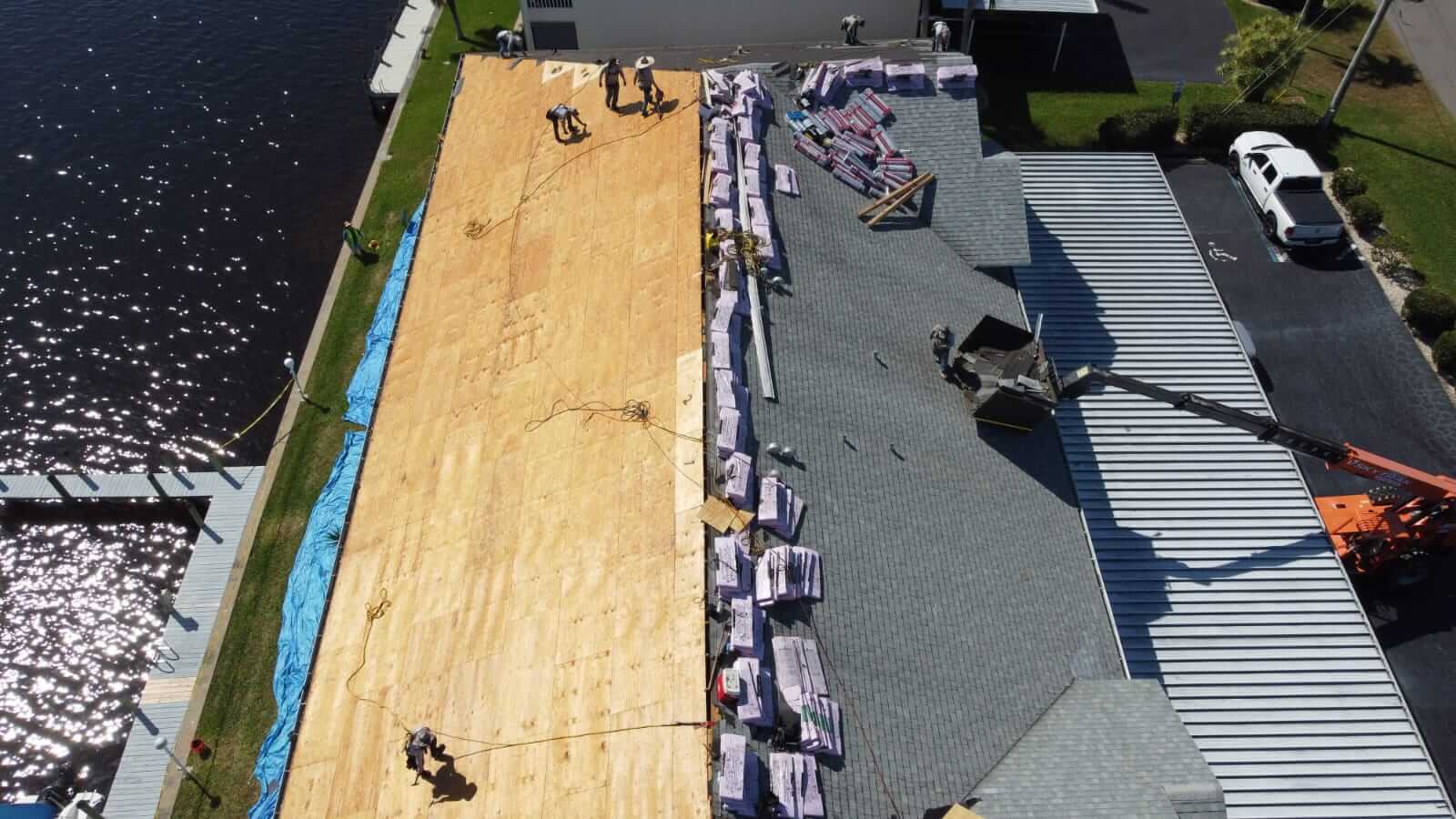
Design Factors and Longevity🏗️
The ultimate goal of all these requirements is to integrate the sheathing into the overall design of a high-performance roof. We measure the sheathing’s structural function by its durability factor and strength under lateral and uplift forces.
-
Strength: Due to the specified thickness and the mandatory use of ring-shank nails at close spacing, the roof deck incorporates an immense amount of strength. The sheathing transforms into a robust, continuous structural element. It becomes capable of surviving hurricane-force winds.
-
Lifespan: When the roof’s waterproofing layers (underlayment and roof covering) properly protect the sheathing, the plywood or OSB lasts for the entire lifespan of the structure. It is an integral structural component and you can expect it to be good for 50 to 75 years or more. Damage usually occurs only when the roof covering is compromised, allowing chronic water intrusion. This water intrusion then necessitates a sheathing replacement.
Secure Your Home with Giza Roofing Solutions📞
Don’t leave the structural integrity of your roof to chance. Because the sheathing is the most critical foundation of your entire roofing system, it must be installed strictly according to Florida State Code, utilizing the optimal thickness and the mandatory $2-3/8$ inch ring-shank nails to resist Southwest Florida’s powerful winds. If your roof is aging or if you are considering a replacement, it is essential that a professional assessment of your current sheathing and fastening be completed. Contact Giza Roofing Solutions today to schedule a free, no-obligation inspection and consultation. Our certified experts ensure every structural detail, from the sheathing thickness to the nail pattern, is meticulously executed to give your home the highest level of protection it deserves. Protect your investment—call us now!
Phone: 239-980-2424
Website: https://gizaroofingsolutions.com/roof-replacement/
Check out our Blog! https://gizaroofingsolutions.com/southwest-florida-roofing-blog/
Read our reviews https://gizaroofingsolutions.com/feedback/