
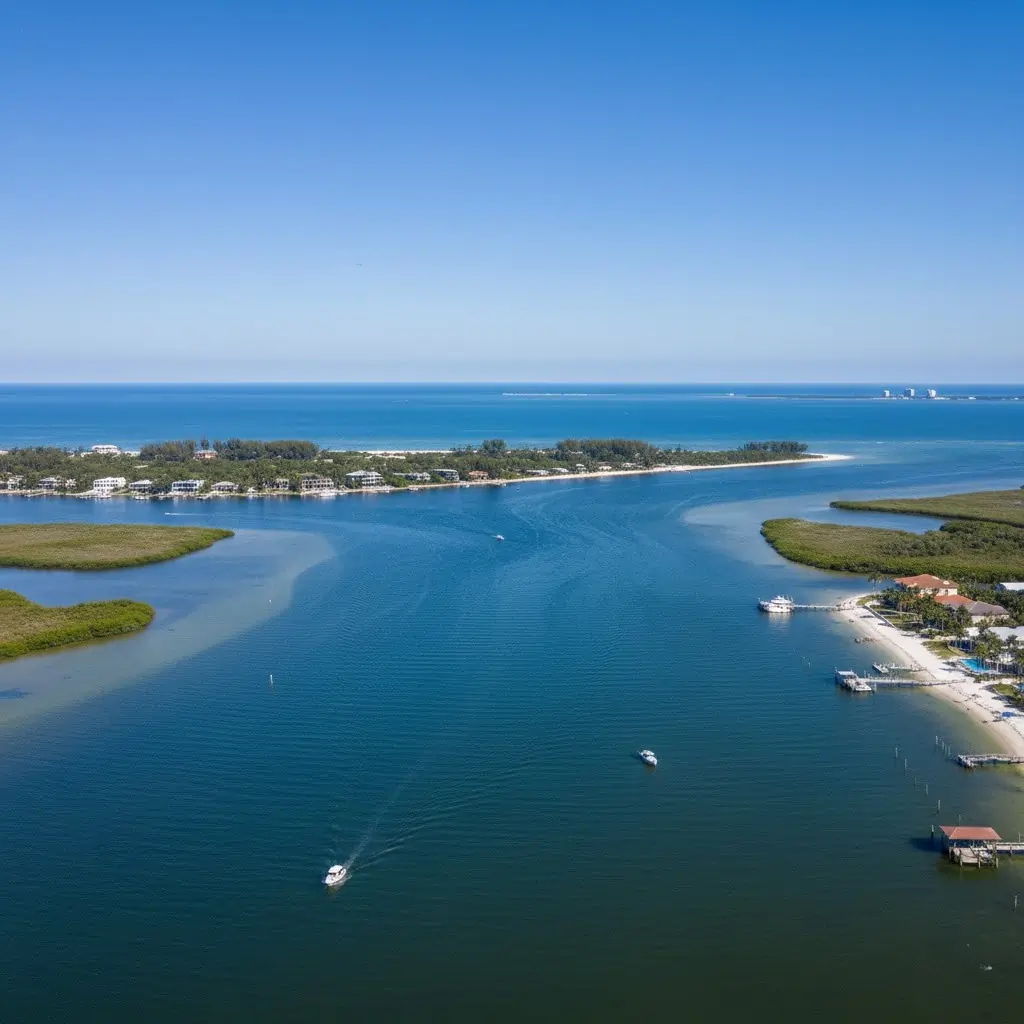
Living by the ocean offers stunning views and desirable weather. However, this idyllic coastal environment presents a major, often underestimated, challenge: saltwater’s relentless assault on roofs. Indeed, ocean breezes carry salty sea air inland. This air deposits salt relentlessly on exterior surfaces, making the roof a primary target. Consequently, proper property management requires specialized knowledge and proactive maintenance.
saltwater damage (primarily from salt air/spray) is considered a significant issue for roofs in Cape Coral and the surrounding Southwest Florida coastal areas.
Cape Coral’s location, with its proximity to the coast, high humidity, and frequent breezes, creates an environment where salt particles in the air are constantly settling on roofs. This leads to accelerated deterioration of roofing materials.
Key Impacts of Salt Air on Cape Coral Roofs:
-
Corrosion of Metal Components: This is one of the biggest threats. Salt air rapidly accelerates the corrosion and rust on:
-
Flashing (the thin metal sheets used to seal joints).
-
Fasteners (nails, screws, clips).
-
Metal roofing (especially galvanized steel or unprotected metals).
-
-
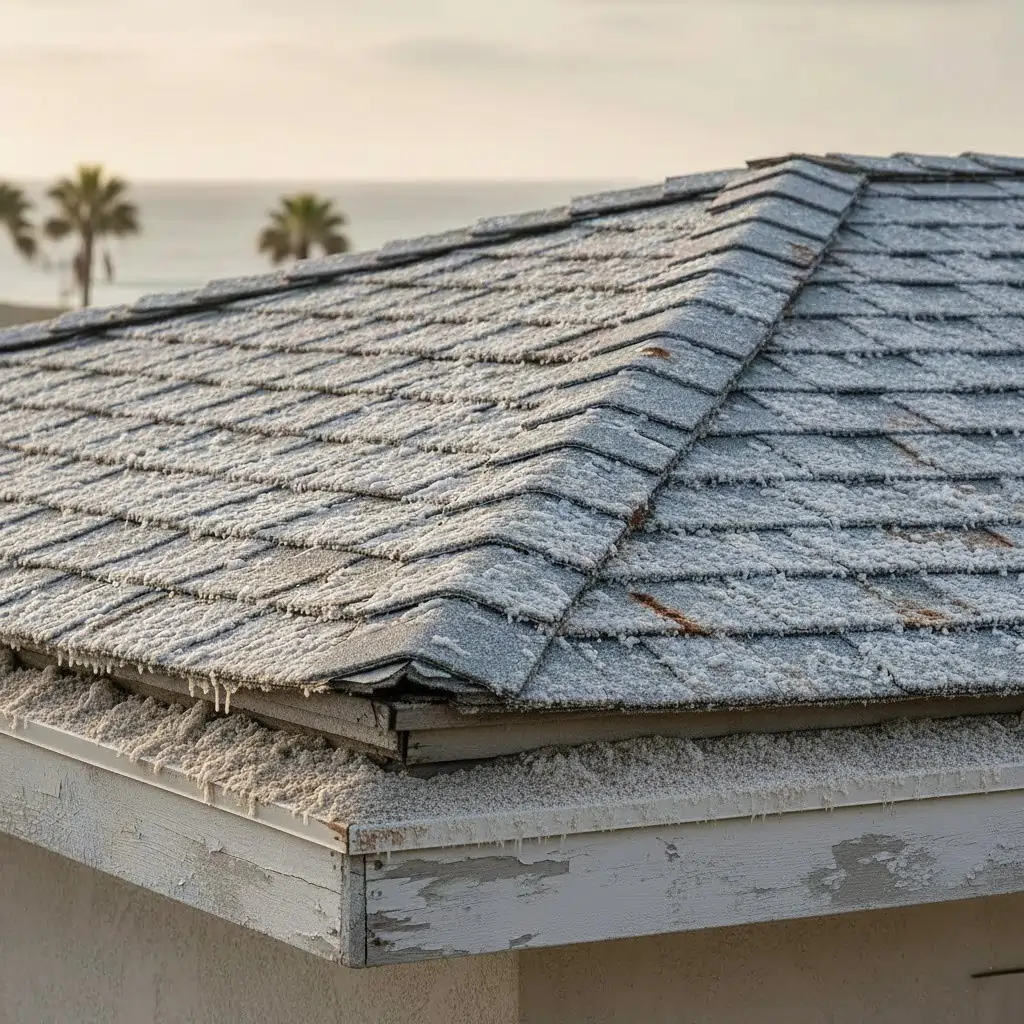
Asphalt Shingle Deterioration: Salt can strip away the protective granules on asphalt shingles, exposing the material beneath to UV rays and hastening its aging, leading to a shorter lifespan.
-
Aesthetic and Structural Issues: Salt residue, combined with high humidity, creates ideal conditions for moss, algae, and mold growth, which trap moisture and can weaken the roof’s structural integrity over time.
-
Wear and Tear: The corrosive nature of salt speeds up the overall wear and tear on most roofing materials, leading to the need for more frequent repairs or premature replacement.
How Saltwater Causes Damage
Saltwater damage is not immediate; rather, it involves gradual corrosion and degradation. Initially, salt crystals land on the roofing materials. Then, these crystals dissolve and reform as humidity levels change. Furthermore, the salt acts as an electrolyte. It significantly speeds up the oxidation of metal components, including flashing, gutters, and fasteners.
-
Corrosion: Salt visibly eats away metal elements, compromising structural integrity.
-
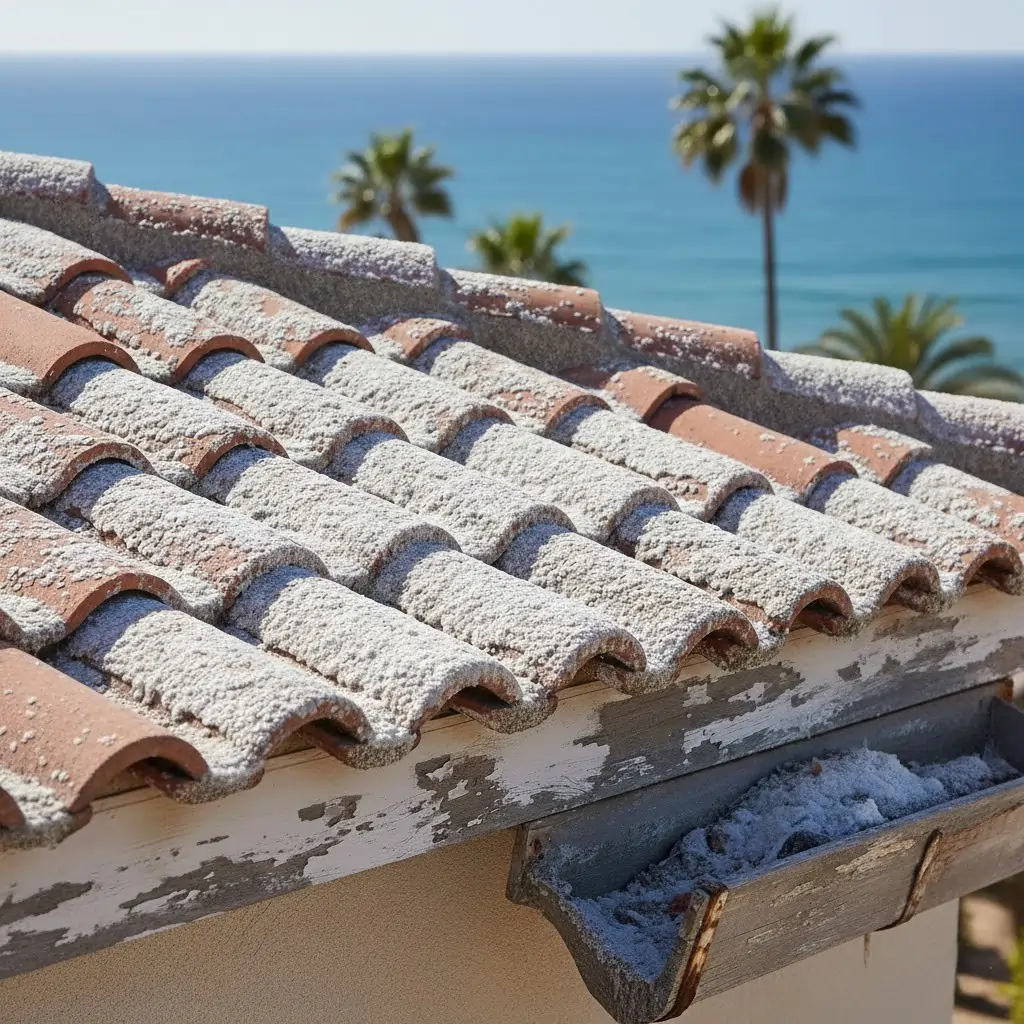
Material Degradation: Shingles and tiles suffer from efflorescence. Salt buildup creates a powdery residue that causes cracking and weakening.
-
Accelerated Aging: The lifespan of the entire roofing system shrinks considerably because the salt constantly breaches protective seals and coatings.
Choose the Right Materials
When you install a new roof or replace an old one in a coastal area, consider the materials carefully. For example, saline air quickly damages conventional roofing materials. Instead, experts specify materials with inherent resistance to moisture intrusion and corrosion.
-
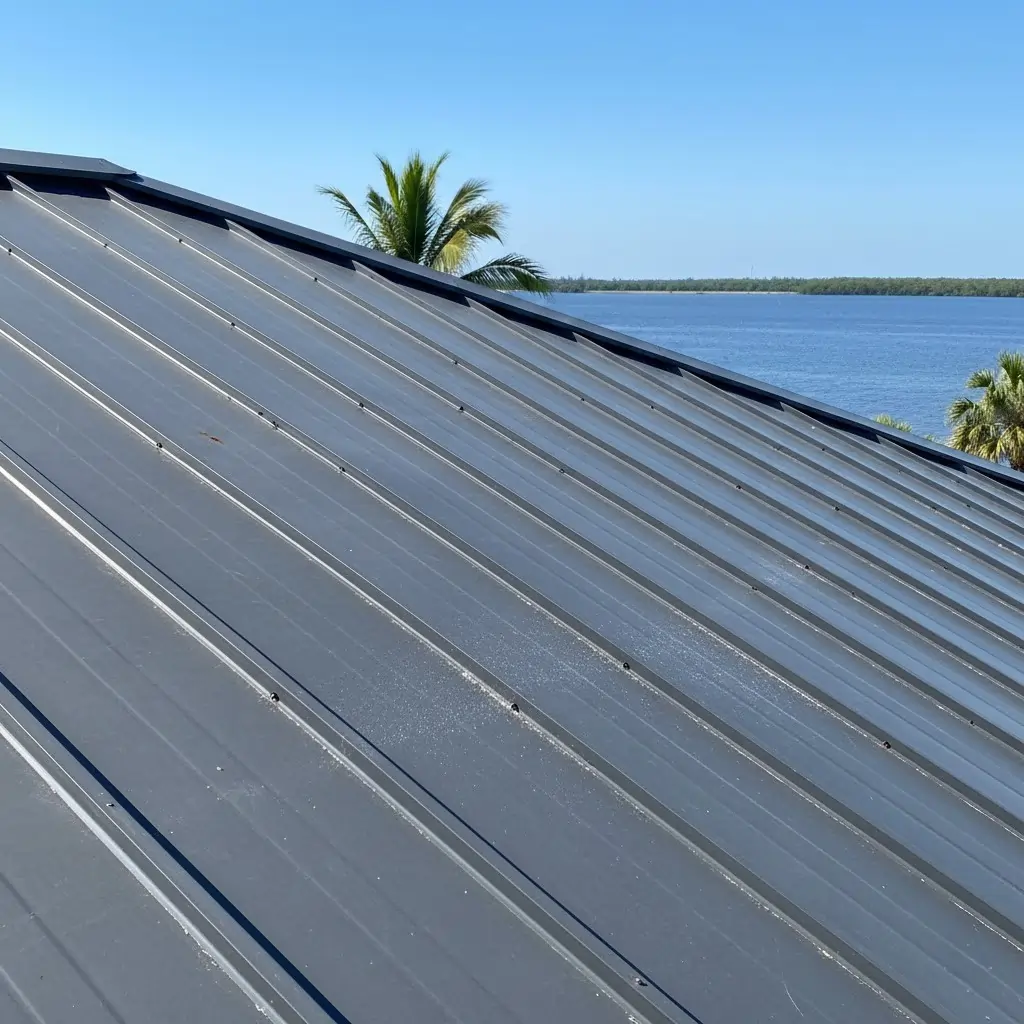
Metal Roofing: Metal components are vulnerable to corrosion. Therefore, professionals often recommend a premium metal roof with a high-quality finish, utilizing specialized coatings like marine-grade aluminum or Galvalume.
-
Tile and Slate: Customers often choose these materials since they are dense and non-porous. This density makes them highly resistant to salt deposition and subsequent damage.
-
Polymer and Composite Shingles: Manufacturers create high-performance composite materials with enhanced resistance to moisture absorption. These offer a modern, durable solution.
Essential Protective Measures and Maintenance
Moving forward, you must maintain the roof routinely to ensure its longevity after selecting the proper materials. Above all, a professional roofing company, like Giza Roofing Solutions, must conduct routine inspections.
-
Regular Rinsing: Homeowners should periodically wash off the salt buildup. However, you must perform this work using low-pressure rinsing, otherwise the work could damage the roofing materials.
-
Protective Coatings: Applicators frequently apply high-quality, salt-resistant sealants or elastomeric coatings to both metal and non-metal surfaces. Consequently, this step creates a barrier between the roofing material and the harsh coastal environment.
-
Immediate Repair: Property owners must immediately address any sign of damage, such as loose flashing or rusted fasteners. Thus, they prevent small problems from quickly escalating into major structural issues.
Conclusion
The challenge of saltwater damage to coastal roofs is a significant one, yet it is entirely manageable with the right strategy. The protection of your investment is ensured when high-quality, resistant materials are specified and a rigorous maintenance schedule is followed. Therefore, homeowners are strongly encouraged to contact Giza Roofing Solutions today to schedule a comprehensive roof assessment and discuss the best solutions for your coastal property.
Phone: 239-980-2424
Website: https://gizaroofingsolutions.com/